
19 January, 2026
Exploration in 2026: Insights Gained from 2025
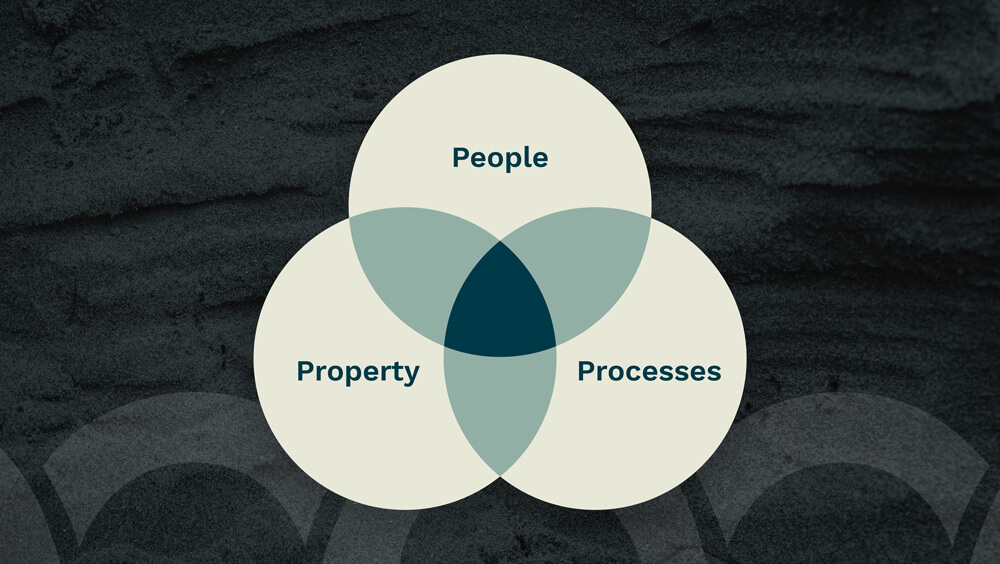
In this field note, Mathias Forss, Founder and President of GeoPool, reflects on an eventful 2025. The key takeaways outline lessons for exploration in the Nordics in 2026 and draw on the balance of property, processes, and people.
Property
Geological Context Shapes Exploration Strategy
When I look at mineral exploration project areas in the Nordics, I do so in a very practical, comparative way. Geologically, Finland, Sweden, and Norway have significant mineral potential, but they are strong in different ways. Finland and Sweden sit on very old Precambrian bedrock with a lot of overburden, while Norway has a more Caledonian-type geology, more mountainous terrain, and much more outcropping. That reflects on how to explore, what methods make sense, and what kind of discoveries you are likely to make. Even within Finland and Sweden, there are variations in the overburden thickness and ice-flow direction that need to be considered.
Infrastructure, Logistics, and Development Reality
I also think infrastructure and access are often underestimated or misunderstood. The Nordics are roughly the size of Ontario, but with about 1.5 times the population and roughly 3 times the road and rail infrastructure. That means mobilization is usually easier and cheaper than people expect, even if salaries and services are higher. You don’t always have the same helicopter dependency or long-distance logistics as in other parts of the world. Not to mention the climate, having the Gulf Stream keeping us warm above the Arctic Circle.
Norway, in particular, has a strong advantage with deep-sea ports along the coast. That matters not only for mining, but also for future development and transport. Finland and Sweden mainly use the Gulf of Bothnia, which works well but has different limitations. These things don’t show up in a drill result, but they matter a lot when projects move forward.
Land Use and Local Interests
Another mineral exploration project area-related aspect I always include is land use. Other land-use industries, as well as protected areas, vary a lot from place to place, covering reindeer herding, wind farms, tourism, solar panels, wetlands, groundwater areas, and indigenous Sami interests. This is not a country-level question – it’s a local one. In some areas, it works well with dialogue and planning; in others, it requires much more adaptation. Ignoring this aspect in the early stage of the permitting or exploration work usually leads to delays later. Building the relationship from the start has long-term benefits for all parties and ensures wise investor spending.
A major factor in property is the extent of exploration already present in an area, or recently conducted, including mining activities. Some municipalities have no exploration permits, while others have a large share of their land held by exploration or mining companies. On a local level, that affects expectations, tolerance, and how familiar people are with exploration. A project in an area with no exploration history has a very different property risk and opportunities than one next to historical or active mining, even if the geology looks similar.
People
Building Trust Through Local Knowledge
For me, people are the factor that determines whether many Nordic projects succeed or fail. One thing I really believe in is the importance of local language and culture. English works fine for geologists, investors, and international companies, but when you speak with landowners, authorities, and local communities, speaking Swedish, Finnish, or Norwegian changes the whole conversation. It becomes more open, more honest, and you understand concerns that would never come up in a formal English meeting.
It is also valuable for the project to combine geological experience from multiple exploration stages and geographic areas. The strength of having both local and global is very valuable.
I also see exploration in the Nordics as a long-term relationship, not a short campaign. Trust is built over time, and it’s built through actions, not presentations. Being present only when drilling is not enough. In fact, it’s often more important to stay engaged when nothing is happening on the ground, when companies are raising funds or waiting for permits. There are maybe political elections or changes among employees at the authorities during this period.
Management, Stakeholders, and Team Culture
Another people-related issue I pay attention to is management experience in foreign jurisdictions. I’ve seen many strong geologists coming from large mining companies who know geology very well, but when they move into the Nordics in operational role for a junior exploration company, they suddenly need to deal with permitting, stakeholder engagement, budgeting in different currencies, seasonal planning, and local expectations. If they haven’t worked in multiple jurisdictions before, this adaptation can be harder than expected. Some people embrace it and learn quickly, others assume they can do things the same way as before, and that often doesn’t work. The value lies in the management understanding this and valuing the local guidance provided.
I think it’s important to understand that landowners, authorities, and companies think on completely different timelines. Junior exploration companies have a long-term vision, but in practice, they think in terms of funding cycles, drill programs, and news flow. Mining companies conducting exploration have a long-term exploration focus. Landowners consider forestry, hunting, farming, reindeer herding, and what will happen to the land over the next generation. Politicians have long-term goals for the municipality, the region, and the country. But realistically, the elections come every four years. If a company only answers the company-side questions, communication breaks down, even if the project is technically strong in communicating with politicians and landowners. The company should adopt the perspectives of local landowners, stakeholders, authorities, and politicians. And this varies both between and within countries and over time.
I also value diversity and company culture. Having teams with diverse backgrounds, genders, and life situations offers better perspectives and stronger collaboration. It’s not a “nice to have”, it improves how work gets done and how companies are perceived locally.
Processes
Understanding Permits and Regulatory Nuances
When it comes to processes, the Nordics really show how important it is to understand what an Exploration permit gives you or allows you to do. For example, in Sweden, an exploration permit is relatively cheap and quick to get, but it does not give you the right to conduct exploration. It only secures the ground. After that, you need landowner approvals, work plans, and off-road permits from other authorities. So, having a permit is not the same as being able to work and conduct exploration work such as drilling. The same structure is in Norway.
Finland works differently. It’s more expensive and time consuming getting an exploration license. When you get an exploration license, the exploration work you had in your application is granted for. If you are outside restrictions, it is a straightforward process. Before you want to conduct exploration, you are obligated to inform the land and stakeholders, but you don’t need additional approvals. In addition, landowners in Finland are compensated annually, regardless of whether exploration work is conducted. That opens a different kind of dialogue, because you contact landowners to arrange compensation, which often leads to more structured communication. The permit also includes off-road access in most normal cases, which makes execution easier once you are approved. Possible damage to trees, roads, and such is compensated in all the Nordic countries.
Evolving Permits and Seasonal Adaptation
I also think the process includes understanding how permitting evolves over time. Initially, operations span a larger area, but once anomalies are followed up on, the area of operation typically decreases. Mineral Exploration permit extensions require justification, costs increase, and authorities expect to see appropriate work being done. Sitting on ground without execution is not a neutral position; it creates both regulatory and social risk, not only for the permit holder but for the whole industry and stakeholders.
Seasonal planning is another part of the process that is easy to underestimate. Mild winters, as we’ve seen every now and then, can shorten winter drilling seasons and change timelines completely, especially in swamp-dominated areas. Companies that don’t plan for this, or on the other hand push work without a clear strategy just to generate news, often struggle later. Either with additional financing or with local social aspects.
Technical Approaches and Knowledge Sharing
From an exploration perspective, I see two main technical approaches in the Nordics on operational approach. One is more geophysics-driven, starting with airborne or ground surveys and then drilling. The other is more geochemistry-driven, starting with large-scale soil sampling and following anomalies back toward the bedrock. Both work, but they give different types of information, and strong teams know when to combine them rather than treating them as competing schools. Here, I believe sharing knowledge and understanding helps everyone within the industry.
Finally, I always come back to balance. A successful project needs property, people, and processes – Discovering Together. Below is a selection of interviews and presentations given in 2025. As we move into 2026, I am confident that with commitment, collaboration, and strategic focus, the Nordic exploration community will continue to advance and thrive. Wishing you success in all your exploration efforts ahead!