7 November, 2025
Exploration industry on the move
Founder and President of GeoPool, Mathias Forss, shares his strategic highlights from the Nordic Funds and Mines (NFM) conference in Stockholm and the Fennoscandian Exploration and Mining (FEM) conference in Levi.
Driving exploration projects forward
With two conferences behind me and two more ahead, I see a clear pattern emerging: the exploration industry is on the move. And it is high time to deepen the conversation about what truly makes a difference.
During a successful Nordic Funds and Mines conference in Stockholm and another very successful Fennoscandian Exploration and Mining conference in Levi, I’ve had the privilege of both presenting and listening, discussing and reflecting. What has stayed with me the most is not a single slide or meeting, but a question. What drives an exploration project successfully forward?
After participating in FEM 2025 in Levi with a larger team from GeoPool – and now looking ahead to the Swedish branch organisation Svemin’s Autumn Meeting and Exploration Day in Stockholm – it feels clear that the industry is evolving. On the surface, much looks the same with geological models, permitting processes, and fieldwork. But beneath the surface, there are crucial differences.
The place, the people, and the processes
At NMF in Stockholm, I gave a presentation for investors, aiming to broaden perspectives. Instead of focusing solely on metal prices and deposit potential, I highlighted three dimensions that I’ve seen influence project outcomes: the place, the people, and the processes.
It’s not always the lack of minerals that stops a project. Often, it’s the lack of clear workflows, communication, and understanding of how decisions affect the entire chain. An area can be geologically promising, but if it is hard to access, seasonal, or burdened with restrictions, development slows – and investors’ patience often shortens.
The people are equally critical. A discovery changes everything – workflows, responsibilities, and expectations. Not everyone is prepared for that shift. And the processes are often the silent factor. Budgets that aren’t communicated, data that isn’t reviewed, permits handled in the wrong order – all of these can derail a project.
Shaping mineral exploration
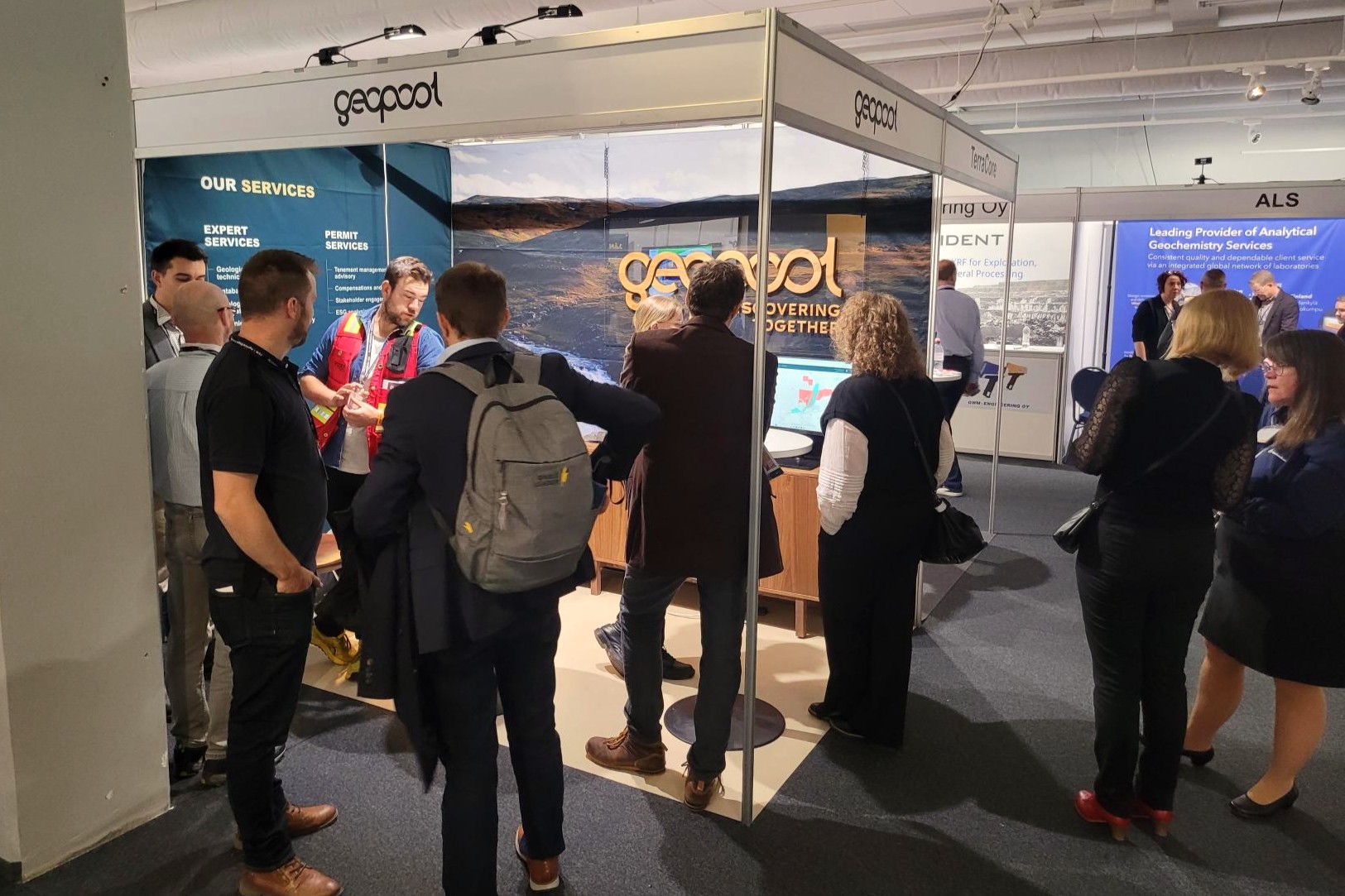
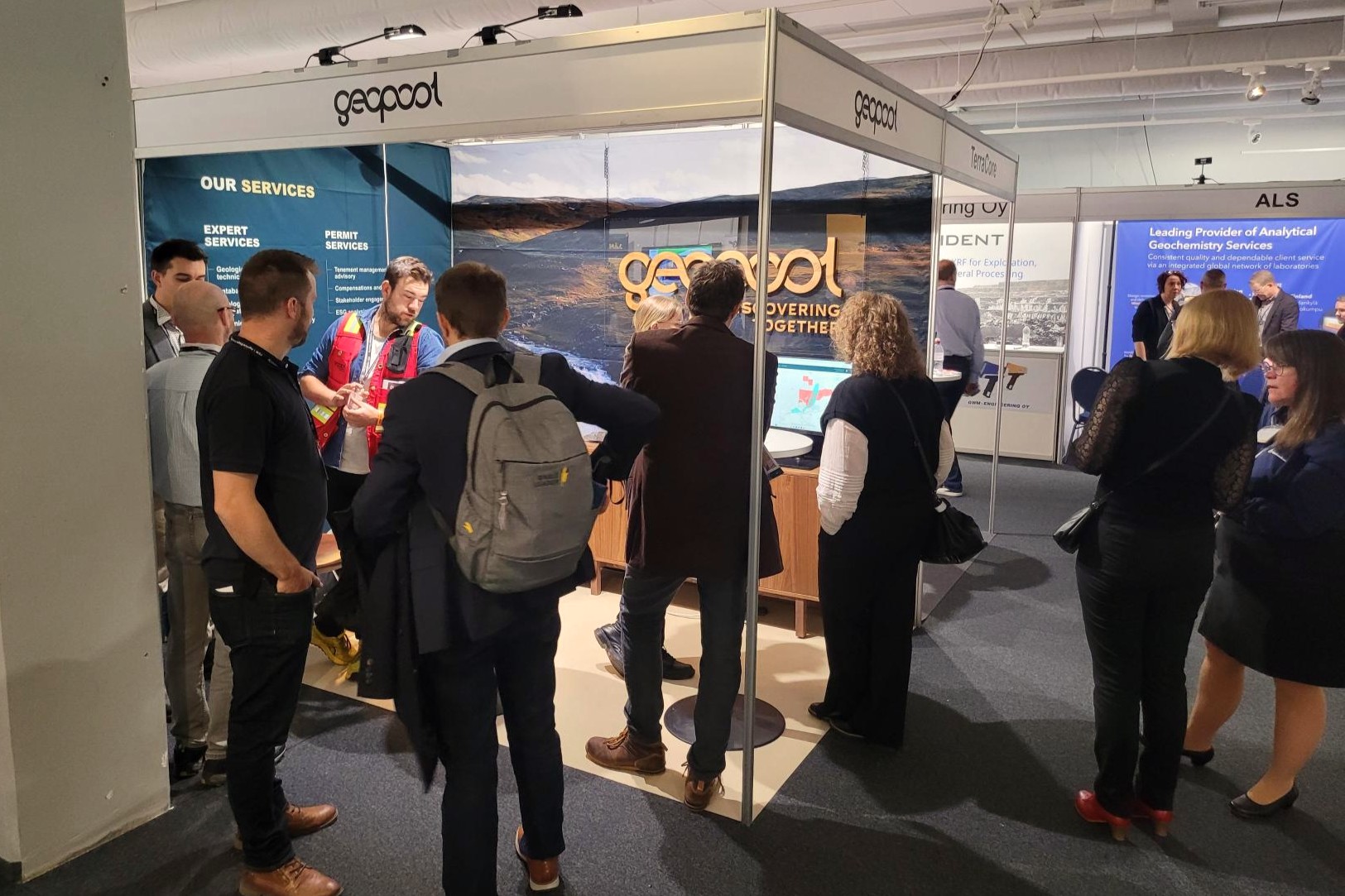
The insights I shared at NMF were clearly reflected in GeoPool’s presence at FEM. We don’t just provide services – we build a cohesive structure that aligns with the realities of exploration, from permitting to fieldwork, through modelling and reporting, with a technical advisor who keeps the whole process connected and drives the project forward.
GeoPool provides support across the entire value chain of mineral exploration – from the initial idea to technical analysis and project execution. Over the years, we’ve worked with both junior explorers taking their first steps and major companies managing complex, multi-country portfolios. This experience has given us a broad understanding of the different goals, workflows, and decision-making processes that shape each project, an insight that allows us to adapt and create real value for our clients.
Our launched web app attracts significant interest not only from companies but also from landowners and authorities. It demonstrates how digitalisation can create transparency and efficiency by giving both companies and landowners real-time insight into field activities and permit status.
Acting on strengths and weaknesses
As we approach Svemin’s Autumn Meeting on November 25, Sweden’s leading forum for mines, minerals, and metals, it’s an opportunity to raise our perspective. Over 400 representatives from industry, politics, and academia gather here to discuss everything from geopolitics to project development. It’s a day where conversations are just as crucial as presentations, and where new perspectives can take root.
At Svemin’s Exploration Day on December 9, where I will be giving a presentation, I want to take these ideas further. Not by presenting a tool, but by showing how a structured way of thinking can help exploration companies identify their own strengths and weaknesses, and act on them.
To succeed in exploration requires more than good geology. It demands insight, structure, and the courage to see one’s own blind spots – and the will to build something that lasts. I look forward to continuing that discussion at Svemin’s Autumn Meeting and Exploration Day.